Why Trauma-Informed Support Will Change the Way You Help Homeless Youth
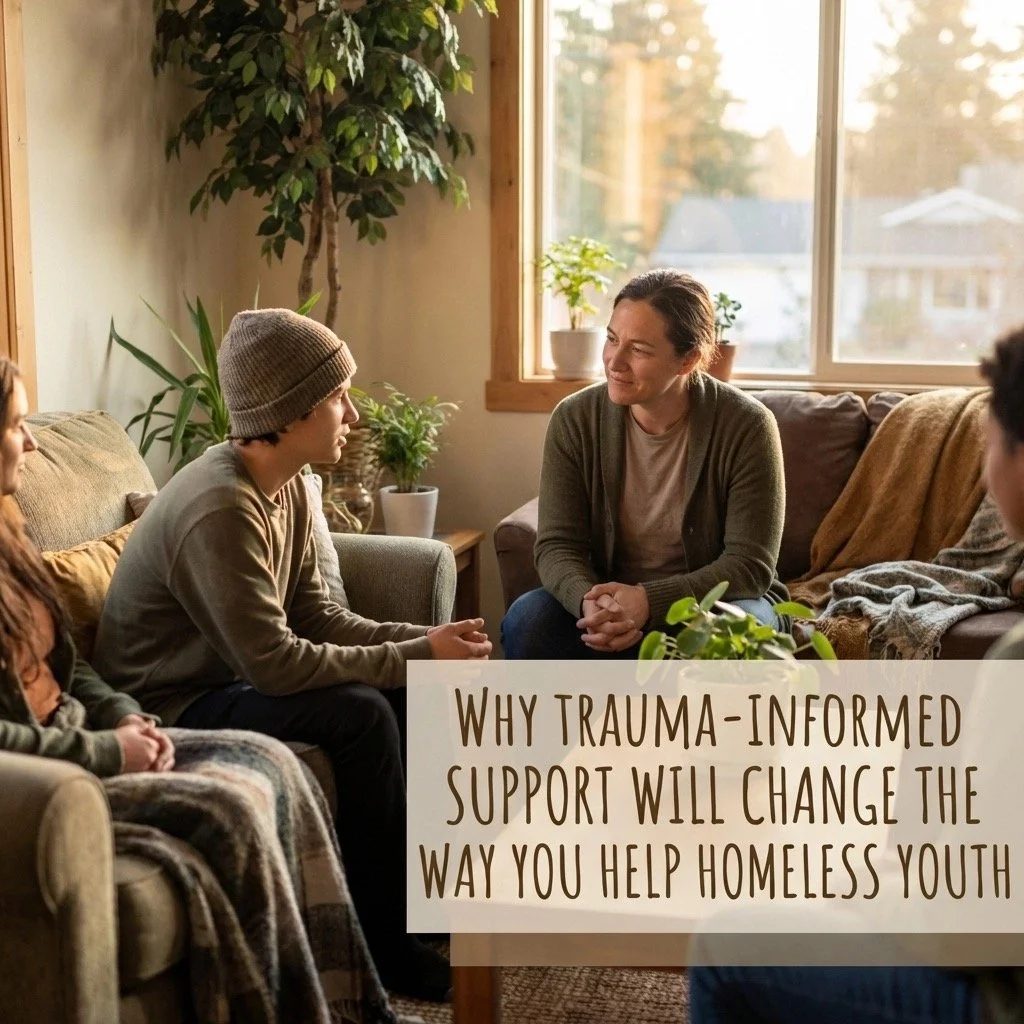
When Avery first walked into our doors at Sana Place Indy, he wouldn't make eye contact. He kept his backpack clutched tight, ready to bolt at any moment. His body language screamed one thing, “I don't trust you.”
And honestly? He had every reason not to.
Most homeless youth have survived experiences that would break many adults. They've learned that trusting people can be dangerous. That's why the old "tough love" approach to helping homeless youth doesn't just fail, it can actually make things worse.
This is where trauma-informed support changes everything.
What Is Trauma-Informed Support Really?
Think of trauma-informed support as switching from asking "What's wrong with you?" to "What happened to you?" It's a complete mindset shift that recognizes trauma isn't just something that happened in the past but it's something that continues to affect how a young person navigates the world every single day.
Instead of treating symptoms, we're addressing root causes. Instead of demanding compliance, we're building trust. Instead of one-size-fits-all solutions, we're creating personalized paths to healing.

At Sana Place Indy, we've seen this approach transform not just individual lives, but entire family systems. When we understand that a young person's "difficult behavior" might actually be a survival strategy that kept them safe, we can respond with compassion instead of frustration.
The Reality for Homeless Youth
Here's what most people don't realize, and that is that nearly all homeless youth have experienced some form of trauma. We're talking about childhood neglect, physical abuse, sexual abuse, or emotional trauma that often starts before they ever hit the streets.
Then homelessness itself becomes a source of ongoing trauma. Sleeping in unsafe places, experiencing violence, going without food, living in constant survival mode, all of this compounds the original wounds.
Without trauma-informed support, these young people often develop:
Chronic depression and anxiety
Post-traumatic stress disorder
Suicidal thoughts
Substance abuse issues
Difficulty forming healthy relationships
But here's the hope, when we address trauma properly, we can actually interrupt these cycles before they become entrenched patterns.
The Science Behind Why This Works
Research shows that agencies using trauma-informed approaches see measurable improvements. Fewer young people need crisis interventions. Fewer require intensive residential treatment. There's less reliance on medications, and young people are more likely to find stable housing and keep it.
Why does this approach work so well? Because it directly addresses what trauma actually does to the brain and body.

Trauma essentially hijacks the nervous system, keeping young people in a constant state of fight, flight, or freeze. Traditional support services can accidentally trigger these responses by making a young person feel cornered, judged, or powerless.
Trauma-informed support creates the opposite environment: safety, predictability, and choice. This allows the nervous system to calm down enough for actual healing and growth to happen.
The Four Core Principles That Change Everything
At Sana Place Indy, our trauma-informed approach rests on four foundational principles that guide every interaction:
1. Safety First (Physical and Emotional)
This means more than just having secure buildings. Emotional safety means young people never feel judged, shamed, or re-traumatized by our support. We're transparent about our processes, consistent in our responses, and we never make promises we can't keep.
2. Trustworthiness Through Transparency
Trust is earned through small, consistent actions. We explain what we're doing and why. We follow through on commitments. We admit when we make mistakes and work to repair them.
3. Choice and Empowerment
Trauma often involves having power taken away. So we give power back through choice. Young people get to decide their goals, their pace, and their priorities. We provide options, not ultimatums.
4. Peer Support and Collaboration
Nothing beats connection with someone who "gets it." We prioritize peer mentorship and create opportunities for young people to support each other. Healing happens in relationship.

What This Looks Like in Practice
Remember Avery from the beginning? Here's how trauma-informed support changed his experience:
Instead of demanding he follow program rules immediately, our team met him where he was. They offered choices, "Would you like to sit over here or over there?" "What feels most important to you today, food, a place to rest, or just someone to listen?"
They didn't take his guardedness personally. They understood it as a normal response to trauma. They moved at his pace, building trust through small, consistent interactions.
Over months, Avery began to relax. He started participating in group activities. He eventually felt safe enough to share his story and begin processing his experiences.
Today, Avery has stable housing and is working toward his GED. More importantly, he's developing healthy relationships and has tools to manage difficult emotions.
How Community Members Can Help
You don't need professional training to use trauma-informed principles. Whether you're a volunteer, donor, or community member, here are simple ways to support homeless youth.
Listen without fixing. Sometimes the most powerful thing you can offer is your full attention without trying to solve everything immediately.
Ask before acting. "What would be most helpful right now?" This simple question gives young people agency in their own support.
Stay consistent. Show up when you say you will. Follow through on commitments. Reliability builds trust.
Avoid judgment. Remember that survival behaviors developed for good reasons, even if they seem counterproductive now.
The Sana Place Indy Difference
At Sana Place Indy, trauma-informed support isn't just a buzzword: it's woven into everything we do. From how we arrange our physical space to how we train volunteers, every detail considers trauma's impact.
Our team understands that healing isn't linear. Some days will be harder than others. Some young people will need to "test" our consistency before they feel safe. And that's okay. We're in this for the long haul.
We've learned that when you create an environment where young people feel truly safe and valued, they begin to heal themselves. Our job isn't to fix them, it's to provide the conditions where their natural resilience can flourish.
The Ripple Effect of Healing
When we help one young person heal from trauma, we're not just changing their life. We're changing the trajectory of their future relationships, their future children, and their entire community.
Trauma-informed support recognizes that behind every "difficult" young person is a human being who has survived things most of us can't imagine. When we respond to their resilience instead of their wounds, we unlock possibilities we never knew existed.
This approach doesn't just change how we help homeless youth, it changes how we see them entirely. Instead of problems to be solved, they become people to be valued. Instead of cases to be managed, they become individuals with unique strengths and unlimited potential.
At Sana Place Indy, we've seen this transformation happen dozens of times. And every time, it reminds us why this work matters so much.
If you want to learn more about our trauma-informed approach or get involved in supporting homeless youth, we'd love to connect with you. Because healing happens best in community: and our community is stronger when we all understand how to create spaces where young people can thrive.